

Call us now
07971459752
Double Crookes Radiometer
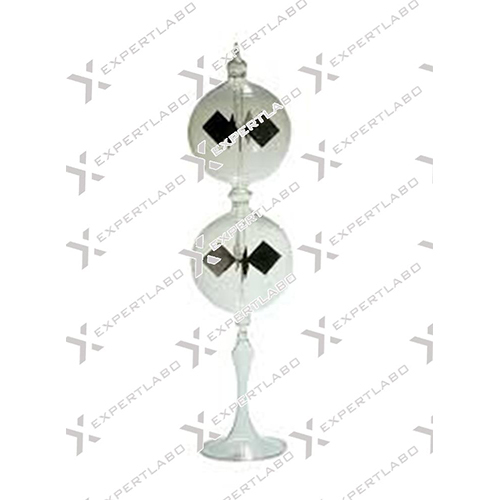

Double Crookes Radiometer Specification
- Glass Type
- Clear Borosilicate Glass
- Shape
- Double Bulb Cylindrical
- Temperature Resistance
- Up to 80°C
- Features
- Consists of Two Bulbs, Four-Vane Rotors, High Sensitivity, Mounted on Stable Base
- Speed Range
- Vane Rotation Proportional to Light Intensity
- Accuracy
- Qualitative Demonstration
- Type
- Double Crookes Radiometer
- Dimension (L*W*H)
- Approx. 120 mm x 50 mm x 160 mm
- Equipment Type
- Scientific Laboratory Instrument
- Equipment Materials
- Glass, Metal Support
- Power
- Operates by Light Energy (No External Power Required)
- Material
- Borosilicate Glass, Aluminium Vanes
- Application
- Physics Demonstrations, Study of Radiation Pressure, Science Laboratories
- Mounting
- On Metal Base
- Observation
- Vane spins faster under intense light
- Finish
- Clear and Polished
- No. of Bulbs
- 2
- Vane Material
- Aluminium, Black and Silver Coating
- Vane Count
- Each Radiometer with 4 Vanes
- Packaging
- Box Packed, Foam Protection
- Unit Weight
- Approx. 200 g
- Maintenance
- Wipe Clean, Handle with Care
- Operation Principle
- Radiation Pressure / Thermomolecular Effect
Double Crookes Radiometer About
For demonstrating the mechanical effect of reflection and absorption of light and heart. Two partially evacuated glass bulbs, mounted one on top of the other, has four vanes each, which spin low friction pivot. Alternate vanes are dark and white in color. When exposed to sunlight, the vanes rotate in opposite directions.
Innovative Dual Bulb Design
Employing two cylindrical glass bulbs, the Double Crookes Radiometer enhances sensitivity and offers a greater range of demonstration possibilities in physics and science laboratories. The unique construction maximizes the visual impact of radiation pressure and thermomolecular effects when exposed to various light sources.
High-Quality Materials and Finish
Built from clear borosilicate glass for superior clarity and heat resistance, the radiometer includes precision aluminium vanes finished in contrasting black and silver coatings. This combination ensures optimal performance and durability, with a polished appearance suitable for any educational setting or laboratory.
Effortless Operation and Maintenance
Designed for ease of use, the radiometer automatically responds to light without the need for batteries or electrical connections. Maintenance is straightforward-simply wipe clean and handle with care to preserve the instrument's precision and appearance. Safe packaging includes foam protection for transport and storage.
FAQ's of Double Crookes Radiometer:
Q: How does the Double Crookes Radiometer operate?
A: The Double Crookes Radiometer functions by utilizing radiation pressure and the thermomolecular effect. When exposed to light, the black and silver aluminium vanes inside each bulb rotate, with the speed of rotation directly proportional to the intensity of the light, visually demonstrating the principles of radiation pressure.Q: What is the benefit of the double bulb design compared to a standard radiometer?
A: The dual bulb design increases observation opportunities and sensitivity, enabling more detailed demonstrations and comparative study scenarios in physics experiments. It is especially valuable for illustrating advanced concepts in science laboratories and classroom settings.Q: Where can this radiometer be used effectively?
A: This scientific instrument is ideal for educational settings such as physics classrooms, science laboratories, and demonstration workshops. Its qualitative performance makes it suitable for both teaching fundamental principles and supporting hands-on exploration of radiant energy concepts.Q: What is the recommended process for setting up and operating the instrument?
A: To use the radiometer, simply place it on a stable surface in a well-lit area. Expose it to a light source-observing as the vanes in both bulbs begin to rotate. No external power or complex setup is necessary, as it is fully powered by ambient light.Q: What precautions should be taken when handling the radiometer?
A: As the device is crafted from borosilicate glass and contains delicate internal components, handle the instrument with care. Avoid exposure to extreme temperatures (beyond 80C), and clean only by lightly wiping the surface to maintain optical clarity and function.Q: What are the main applications of this instrument?
A: The Double Crookes Radiometer is primarily used for qualitative demonstrations of radiation pressure and the effects of light energy. It supports the teaching of physics principles related to radiant energy, serving as a valuable tool in science laboratories and educational institutions across India and beyond.Tell us about your requirement

Price:
Quantity
Select Unit
- 50
- 100
- 200
- 250
- 500
- 1000+
Additional detail
Mobile number
Email

More Products in Physics Equipments Category
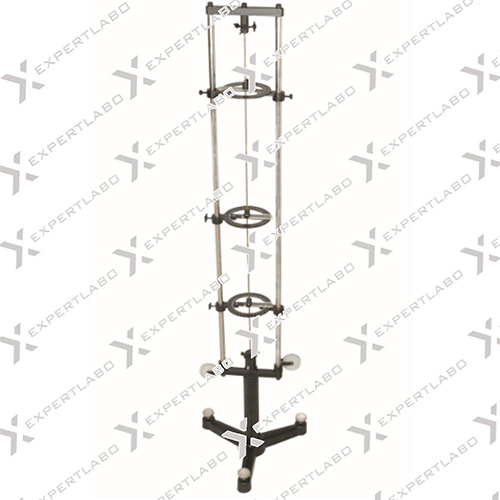
Vertical Torsion Apparatus
Price 2000 INR / Piece
Minimum Order Quantity : 1 Piece
Type : Other, Vertical Torsion Apparatus
Control Type : Manual
Features : Rugged construction, replaceable torsion rod, easy mounting, smooth rotation mechanism, stable base
Application : To study the torsional behavior of wires and rods, used in material science and mechanical engineering labs
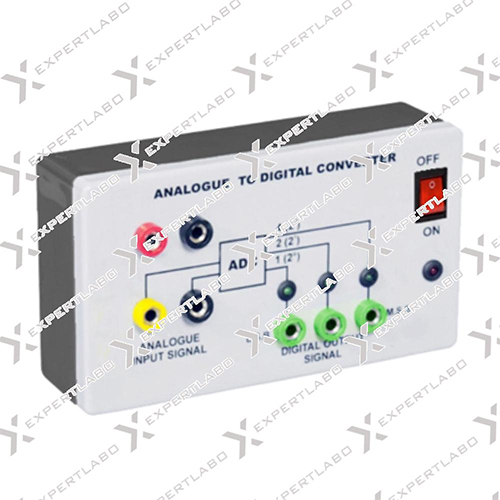
Analogue To Digital Converter
Price 3500 INR
Minimum Order Quantity : 1 Piece
Type : Other, Analogue to Digital Converter
Control Type : Microcontroller/Interface Controlled
Features : High Accuracy Conversion, Low Power, Easy Interface, LED Indicator
Application : Signal Conversion, Industrial Automation, Data Acquisition, Instrumentation
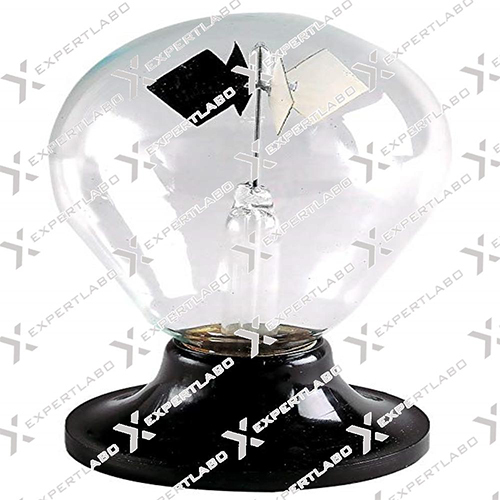
Crookes Radiometer
Price 1000 INR
Minimum Order Quantity : 1 Piece
Type : Other, Crookes Radiometer
Control Type : None (automatic via light exposure)
Features : Rotates when exposed to sunlight or strong artificial light; sensitive to various light intensities; sealed vacuum bulb
Application : Demonstration of light energy conversion, physics education, science laboratory, optical experiments
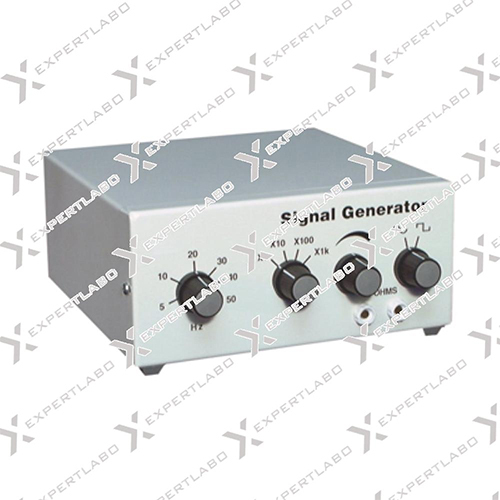
Bench Signal Generator
Price 1500 INR
Minimum Order Quantity : 1 Piece
Type : Other, Bench Signal Generator
Control Type : Rotary Knob/Push Button
Features : Variable frequency output, Stable signal, Compact design
Application : Laboratory and electronic testing

Expert Labo
GST : 06BELPA5037D2ZX
GST : 06BELPA5037D2ZX
Office 1001, Housing Board Colony, Ambala Cantt, Ambala Cantt - 133001, Haryana, India
Phone :07971459752
Mr Ajay Manocha
(Proprietor)
Mobile :07971459752
Mr- Ajay Manocha
(Proprietor)
Mobile :07971459752
 Send Inquiry
- Biology Models
- Laboratory Equipment
- Pharmaceutical Lab Equipment
- Laboratory Instruments
- Physics Equipments
- Laboratory Glassware
- Laboratory Apparatus
- Hospital Equipment
- Physics Instruments
- Testing Machine
- Hospital Furniture
- Oxygen Flow Meter
- Educational Aids
- Biological Models
- Hospital Bed
- Cement Testing Equipment
- Soil Testing Equipment
- Anatomical Models
- Suction Machine
- Hospital Uniform
- Autoclave And Sterilizer
- Mortuary Cabinet
- Laboratory Microscope
- Medicine Cabinet
- Crash Cart Trolley
- Surgical Tray
- Compression Testing Machine
- Hot Air Oven
- Lab Safety Products
- Laboratory Testing And Measuring Instrument
- Survey Total Station
- Blood Pressure Monitor
- Dialysis Chair
- Examination Couches
- OT Lights
- OT Tables
- Patient Transfer and Handling System
- Ward -OT Equipments
- Examination Lights
 Send Inquiry
 Send SMS
 Call Me Free
Expert Labo
All Rights Reserved.(Terms of Use)
Developed and Managed by Infocom Network Private Limited.
Developed and Managed by Infocom Network Private Limited.

