

Call us now
07971459752
Compact Laboratory Centrifuge
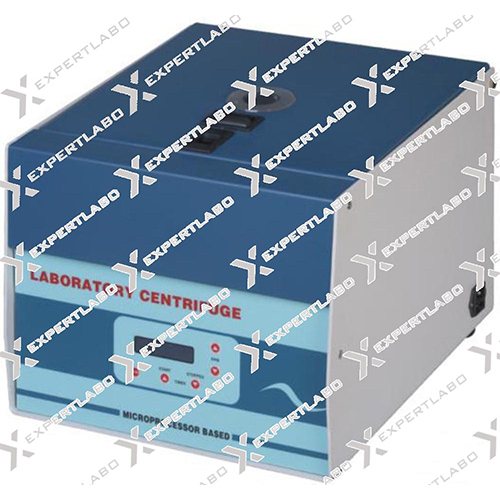

Compact Laboratory Centrifuge Specification
- Speed Range
- Up to 3500 RPM
- Display Type
- Analog
- Control Type
- Manual Speed Control
- Features
- Compact design, low noise, stable operation, easy to operate
- Shape
- Rectangular
- Accuracy
- 2%
- Power Supply
- AC Mains
- Type
- Compact Laboratory Centrifuge
- Dimension (L*W*H)
- 260 x 240 x 200 mm
- Equipment Type
- Centrifuge Machine
- Equipment Materials
- Mild Steel Body with powder coated finish
- Power
- 40 W
- Voltage
- 220 V AC
- Material
- Mild Steel
- Application
- Separation of fluids, gas, or liquid for laboratory use
- Capacity (Ltr)
- 8 x 15 ml (Tube Capacity)
- Noise Level
- 55 dB
- Rotor Type
- Angle Head Rotor
- Fuse Protection
- Yes
- Finish
- Powder Coated
- Safety Lock
- Lid Interlock Safety
- Weight
- Approx. 7 kg
- Number of Tubes
- 8 Tubes
- Max Relative Centrifugal Force (RCF)
- 1350 x g
- Operating Environment
- Ambient Temperature 5C to 40C, Humidity 80%
About Compact Laboratory Centrifuge
Compact rectangular body made of mild steel duly powder coated, with clear acrylic lockable lid, continuously variable speed regulator, safety fuse, pilot lamp etc. provided on streamlined panel. Maximum speed 4000 RPM. A special safety mode is provided that when lid is open instrument will stop working. With plug-cord to work on 220 V AC 50 Hz single phase.
Capacity (ml.) : 4 x 50, 6 x 50, 8 x 15, 12 x 15, 16 x 15 ANY ONE
Optional :
- Automatic 0-60 minutes Timer.
- Speedometer Digital.
- Maximum speed 10000 can also be provided
Stable and Quiet Operation
This laboratory centrifuge is meticulously engineered to provide stable rotation while maintaining a noise level of 55 dB, making it ideal for continued use in shared laboratory spaces. Its robust construction with a mild steel body and powder-coated finish provides both durability and a professional appearance.
Enhanced Safety Features
Safety is prioritized through a lid interlock system and built-in fuse protection, ensuring secure operation and minimizing the risk of accidents. The manual speed control allows users precise adjustments, while the analog display ensures easy monitoring during procedures.
Versatile Laboratory Applications
Designed for separation of fluids, gases, or liquids, this compact centrifuge fits effortlessly into laboratories with limited space. Its compatibility with standard 15 ml tubes and ability to process up to 8 tubes simultaneously streamlines workflow for a variety of experimental and diagnostic needs.
FAQ's of Compact Laboratory Centrifuge:
Q: How do I operate the compact laboratory centrifuge?
A: To operate the centrifuge, ensure the unit is on a stable surface and connected to a 220 V AC power supply. Insert up to 8 tubes (15 ml each) into the angle head rotor, close the lid securely to activate the interlock safety feature, set your desired speed using the manual control, and monitor progress on the analog display.Q: What types of samples can be separated with this centrifuge?
A: This centrifuge is suitable for the separation of various fluids, gases, or liquids typically required in laboratory tests, including blood, cell suspensions, or chemical solutions, making it useful for research, diagnostics, and routine laboratory workflows.Q: When should I use the maximum speed or RCF settings?
A: The maximum speed (up to 3500 RPM) and RCF (1350 x g) are generally used when rapid and efficient separation is necessary. Refer to your laboratory protocol to determine the optimal speed and time for different sample types to ensure best results.Q: Where can the centrifuge be installed for optimal performance?
A: Place the centrifuge on a stable, flat surface in an environment with ambient temperatures between 5C and 40C and humidity below 80%. Ensure enough clearance around the machine for ventilation and easy access.Q: What is the process for maintaining the centrifuge?
A: Regularly clean the rotor and interior with a mild detergent and wipe the powder-coated exterior. Always perform maintenance with the device powered off and unplugged. Inspect the fuse periodically and replace it as necessary. Consult the user manual for detailed upkeep instructions.Q: How does the lid interlock safety system benefit users?
A: The lid interlock safety prevents the centrifuge from operating with the lid open, minimizing risk of injury or sample spillage during use. This feature ensures laboratory staff can operate the equipment confidently and securely.Tell us about your requirement

Price:
Quantity
Select Unit
- 50
- 100
- 200
- 250
- 500
- 1000+
Additional detail
Mobile number
Email

More Products in Laboratory Equipment Category
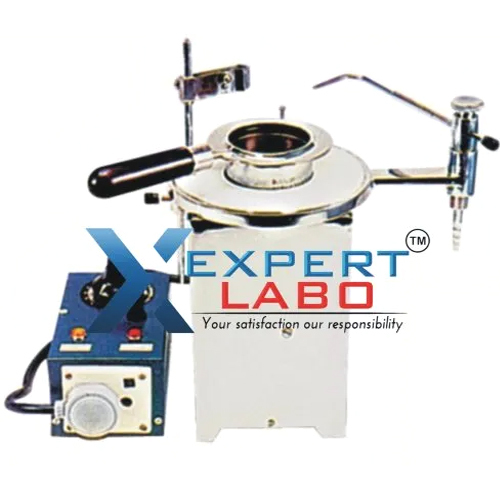
Cleveland Flash Fire Point Apparatus
Price 10000 INR / Unit
Minimum Order Quantity : 1 Unit
Features : High Quality
Warranty : Yes
Material : MS
Usage : Industrial
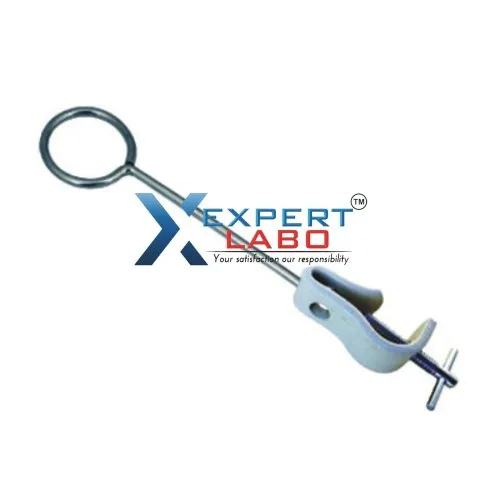
Metal Sheet Retort Ring Bosshead
Price 150 INR / Unit
Minimum Order Quantity : 100 Units
Features : Anticorrosive, Fine finish and Sturdiness
Warranty : Yes
Material : Metal
Usage : For chemical laboratory for holding glasswares
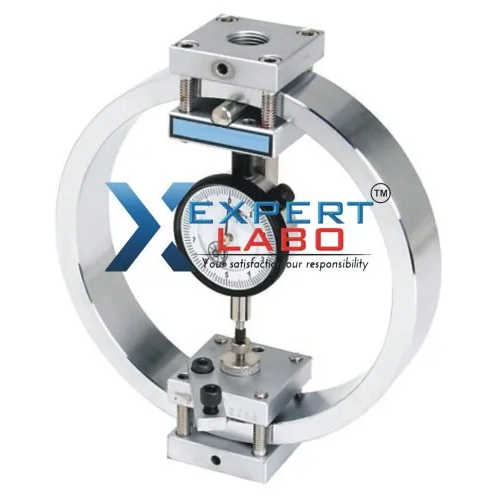
Steel Circular Proving Ring
Price 3000 INR / Unit
Minimum Order Quantity : 10 Units
Features : High Quality
Warranty : Yes
Material : SS
Usage : Used for load measurements and are used in outfits of a number of Soil / Cement & Bitumen Testing.
Stainless Steel Laboratory Humidifier
Price 200000 INR / Unit
Minimum Order Quantity : 1 Unit
Features : High Quality
Warranty : Yes
Material : SS

Expert Labo
GST : 06BELPA5037D2ZX
GST : 06BELPA5037D2ZX
Office 1001, Housing Board Colony, Ambala Cantt, Ambala Cantt - 133001, Haryana, India
Phone :07971459752
Mr Ajay Manocha
(Proprietor)
Mobile :07971459752
Mr- Ajay Manocha
(Proprietor)
Mobile :07971459752
 Send Inquiry
- Biology Models
- Laboratory Equipment
- Pharmaceutical Lab Equipment
- Laboratory Instruments
- Physics Equipments
- Laboratory Glassware
- Laboratory Apparatus
- Hospital Equipment
- Physics Instruments
- Testing Machine
- Hospital Furniture
- Oxygen Flow Meter
- Educational Aids
- Biological Models
- Hospital Bed
- Cement Testing Equipment
- Soil Testing Equipment
- Anatomical Models
- Suction Machine
- Hospital Uniform
- Autoclave And Sterilizer
- Mortuary Cabinet
- Laboratory Microscope
- Medicine Cabinet
- Crash Cart Trolley
- Surgical Tray
- Compression Testing Machine
- Hot Air Oven
- Lab Safety Products
- Laboratory Testing And Measuring Instrument
- Survey Total Station
- Blood Pressure Monitor
- Dialysis Chair
- Examination Couches
- OT Lights
- OT Tables
- Patient Transfer and Handling System
- Ward -OT Equipments
- Examination Lights
 Send Inquiry
 Send SMS
Expert Labo
All Rights Reserved.(Terms of Use)
Developed and Managed by Infocom Network Private Limited.
Developed and Managed by Infocom Network Private Limited.

