

Call us now
07971459752
Crookes Radiometer
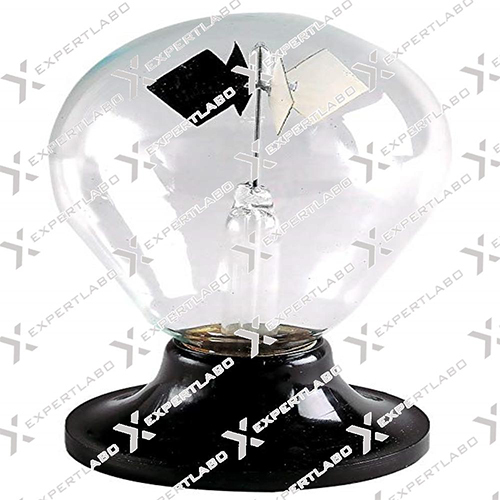

Crookes Radiometer Specification
- Power Supply
- Solar/Light powered
- Temperature Resistance
- Standard room temperatures; avoid exposure to extremes
- Glass Type
- Clear laboratory-grade glass
- Control Type
- None (automatic via light exposure)
- Accuracy
- Qualitative demonstration (not quantitative instrument)
- Speed Range
- Vane speed varies with light intensity (no fixed range)
- Shape
- Spherical glass bulb mounted on a stand
- Features
- Rotates when exposed to sunlight or strong artificial light; sensitive to various light intensities; sealed vacuum bulb
- Type
- Crookes Radiometer
- Dimension (L*W*H)
- Approx. 14 cm (Height) x 7 cm (Diameter)
- Equipment Type
- Physics Laboratory Demonstration Equipment
- Equipment Materials
- Glass bulb with metal vane assembly
- Power
- Operates via light energy (no external power required)
- Material
- Superior quality glass and lightweight metal vanes
- Application
- Demonstration of light energy conversion, physics education, science laboratory, optical experiments
- Operation Principle
- Radiometric effect (light-momentum-induced rotation) in partial vacuum
- Mounting Style
- Stand-mounted for tabletop use
- Usage Environment
- Classroom, laboratory, educational display
- Maintenance
- Dust with soft cloth, handle glass with care
- Vacuum Level
- Partially evacuated bulb
- Colour
- Transparent glass bulb; black and white vanes
- Weight
- Lightweight (Approx. 100 grams)
- Vane Material
- Lightweight metal (typically aluminum or tin)
- Packaging
- Individual carton box with protective padding
- Number of Vanes
- Four (2 black, 2 white)
Crookes Radiometer About
Convert light into motion and demonstrate radiant heat. This device has a rotating shaft supporting two vanes, mounted in an evacuated glass bulb. One side of each vane is black, the other shiny silver. High light levels cause the vanes to turn.
Demonstrate the Wonders of Light Energy
Showcasing the Crookes Radiometer in your classroom or laboratory invites students and observers to witness the direct transfer of energy from light to motion. Its transparent glass bulb and contrasting vanes make the motion easy to observe, stimulating curiosity and engaging learners in foundational physics concepts.
Superior Materials and User-Friendly Design
Crafted from laboratory-grade clear glass and lightweight metal vanes, the radiometer is built for clarity, durability, and consistent demonstration. Its stand-mounted design offers stable tabletop placement, while its lightweight structure (about 100 grams) ensures easy handling and minimal risk of damage during routine use.
Simple Maintenance and Packaging
Maintaining the Crookes Radiometer is straightforward; dust gently with a soft cloth and handle the glass with care to keep the device pristine for repeated demonstrations. Each unit is packaged individually in a protective carton, safeguarding it against potential damage during shipping and storage.
FAQ's of Crookes Radiometer:
Q: How does a Crookes Radiometer work?
A: A Crookes Radiometer operates based on the radiometric effect, where light energy strikes the four metal vanes (two black, two white) inside the partially evacuated glass bulb. The vanes rotate as light is absorbed and reflected, demonstrating the transfer of light energy into mechanical motion.Q: What environments are suitable for using the radiometer?
A: The radiometer is best suited for controlled indoor environments such as classrooms, laboratories, and educational displays. Standard room temperatures are ideal, and it should not be exposed to extreme heat or cold.Q: When will the vanes start to rotate?
A: The vanes begin to rotate when the device is placed under direct sunlight or exposed to sufficiently strong artificial light. The speed of rotation depends on the light intensity; brighter light causes faster motion.Q: Where should I place the radiometer for best results?
A: Place the radiometer on a stable tabletop stand near a strong light source, such as a sunny window or under a bright lamp. Ensuring the glass bulb is clean and unobstructed will help maximize the observable rotation.Q: What is the process for maintaining the Crookes Radiometer?
A: Keep the device dust-free by gently cleaning it with a soft cloth and always handle the glass bulb with care. Avoid striking or dropping the instrument to maintain the vacuum seal and functionality.Q: How can the radiometer benefit physics education?
A: The Crookes Radiometer visually demonstrates the conversion of light energy into mechanical motion, providing an effective, hands-on way for students to grasp concepts in thermodynamics and optics. Its engaging movement makes complex principles accessible and memorable.Q: What materials is the Crookes Radiometer made from?
A: The unit is constructed from superior laboratory-grade transparent glass for the bulb, and lightweight metal (typically aluminum or tin) for the vanes, ensuring durability and clear visibility for demonstrations.Tell us about your requirement

Price:
Quantity
Select Unit
- 50
- 100
- 200
- 250
- 500
- 1000+
Additional detail
Mobile number
Email

More Products in Physics Equipments Category
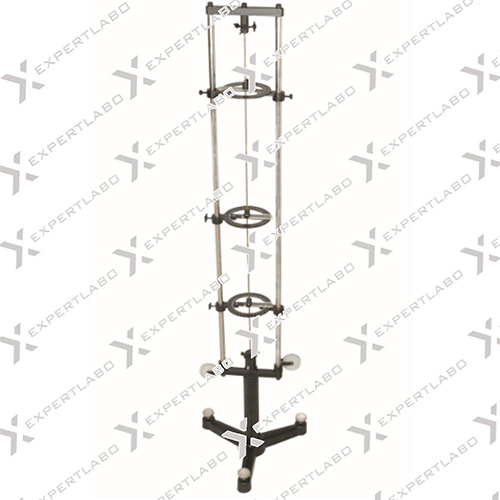
Vertical Torsion Apparatus
Price 2000 INR / Piece
Minimum Order Quantity : 1 Piece
Material : Metal with precision components
Accuracy : High sensitivity, scale graduated for precise angle measurement
Temperature Resistance : Ambient Laboratory Conditions
Equipment Materials : Mild Steel, Stainless Steel, Aluminum components
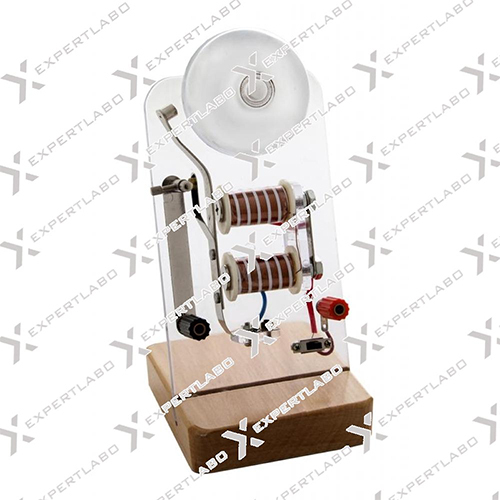
Bell Demonstration
Price 400 INR
Minimum Order Quantity : 1 Piece
Material : Borosilicate Glass, Metal
Accuracy : Standard laboratory precision
Temperature Resistance : Up to 60C
Equipment Materials : Glass dome, metal base, electric bell, rubber components
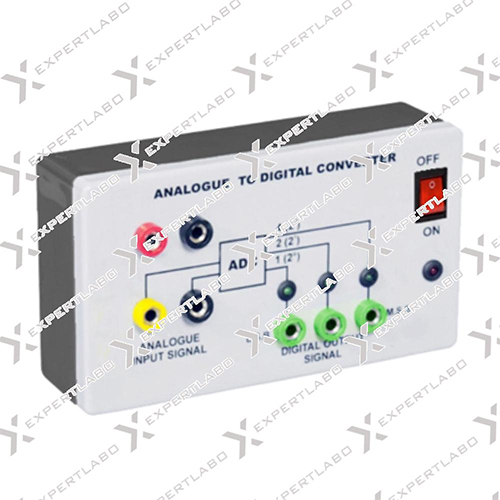
Analogue To Digital Converter
Price 3500 INR
Minimum Order Quantity : 1 Piece
Material : Plastic/PCB/Metal
Accuracy : 0.5% FSR (Full Scale Range)
Temperature Resistance : 0C to 70C Operating Range
Equipment Materials : Highgrade PCB, Electronic Components, Metal Connectors
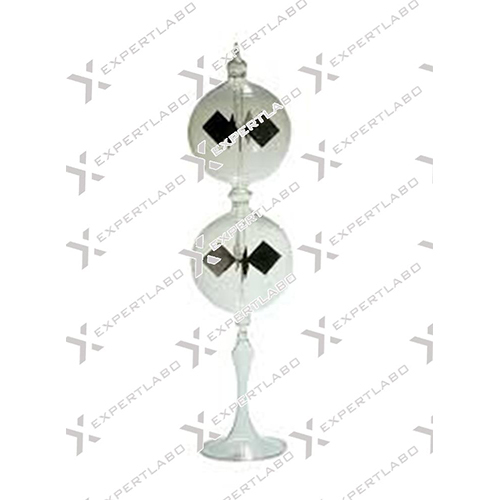
Double Crookes Radiometer
Price 4500 INR
Minimum Order Quantity : 1 Piece
Material : Borosilicate Glass, Aluminium Vanes
Accuracy : Qualitative Demonstration
Temperature Resistance : Up to 80C
Equipment Materials : Glass, Metal Support

Expert Labo
GST : 06BELPA5037D2ZX
GST : 06BELPA5037D2ZX
Office 1001, Housing Board Colony, Ambala Cantt, Ambala Cantt - 133001, Haryana, India
Phone :07971459752
Mr Ajay Manocha
(Proprietor)
Mobile :07971459752
Mr- Ajay Manocha
(Proprietor)
Mobile :07971459752
 Send Inquiry
- Biology Models
- Laboratory Equipment
- Pharmaceutical Lab Equipment
- Laboratory Instruments
- Physics Equipments
- Laboratory Glassware
- Laboratory Apparatus
- Hospital Equipment
- Physics Instruments
- Testing Machine
- Hospital Furniture
- Oxygen Flow Meter
- Educational Aids
- Biological Models
- Hospital Bed
- Cement Testing Equipment
- Soil Testing Equipment
- Anatomical Models
- Suction Machine
- Hospital Uniform
- Autoclave And Sterilizer
- Mortuary Cabinet
- Laboratory Microscope
- Medicine Cabinet
- Crash Cart Trolley
- Surgical Tray
- Compression Testing Machine
- Hot Air Oven
- Lab Safety Products
- Laboratory Testing And Measuring Instrument
- Survey Total Station
- Blood Pressure Monitor
- Dialysis Chair
- Examination Couches
- OT Lights
- OT Tables
- Patient Transfer and Handling System
- Ward -OT Equipments
- Examination Lights
 Send Inquiry
 Send SMS
Expert Labo
All Rights Reserved.(Terms of Use)
Developed and Managed by Infocom Network Private Limited.
Developed and Managed by Infocom Network Private Limited.

