

Call us now
07971459752
Deionizers (Ion Exchanger)
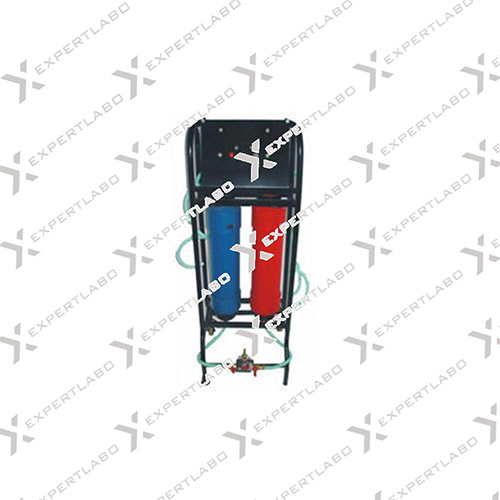

Deionizers (Ion Exchanger) Specification
- Temperature Resistance
- Up to 60°C
- Features
- Easy to Install, Low Maintenance, Rustproof, High Durability
- Accuracy
- High Purity Output (0-2 µS/cm)
- Control Type
- Manual / Automatic (Optional)
- Display Type
- Analogue/Conductivity Meter (Optional)
- Shape
- Vertical Cylindrical
- Type
- Deionizers (Ion Exchanger)
- Dimension (L*W*H)
- 400 x 180 x 820 mm
- Equipment Type
- Water Purification System
- Equipment Materials
- Polypropylene / FRP (Fibre Reinforced Plastic)
- Power
- Not Required (Gravity Based / Manual Operation)
- Material
- Industrial Grade Plastic / FRP
- Application
- Water Purification, Laboratory, Pharmaceutical, Industrial Use
- Capacity (Ltr)
- 20 Ltr/hr to 1000 Ltr/hr
- Resin Type
- Cation and Anion Exchange Resin
- End Connection
- Threaded / Flanged
- Performance Standard
- IS 3119, ASTM D1193 Compliant
- Regeneration
- Manual Regeneration
- Operation
- Batch / Continuous Possible
- Design Pressure
- Up to 3.5 kg/cm2
- Usage
- Ideal for Boiler Water, Laboratory Water, Process Water
- pH Output Range
- 6.5 to 7.5
- Inlet Pressure
- Max 3 kg/cm2
- Service Flow Rate
- 10 Ltr/hr to 1000 Ltr/hr
- Color
- White / Blue / Customer Specific
- Replaceable Cartridge
- Yes
Deionizers (Ion Exchanger) About
The plant consists of One cation Exchanger column containing cation exchanger resin. One anion exchanger column containing anion exchanger Resin. Plant ismounted on M.S. stand with assembly of valves and tubing. One conductivity meter with cell to monitor the ionized solids of purified water and thus control the functions of de-mineralization. The meter is direct reading having reading heavy range 0.40 microns/cm.
JDE-01:
- Capacity 50 litre.
- Capacity 75 litre.
- Capacity 100litre.
Optional Accessories:
- Digital D.O.Meter
Versatile Water Purification Solution
Engineered for use in laboratories, pharmaceutical, and industrial applications, our deionizer ensures consistent delivery of high-quality purified water. Capable of handling both batch and continuous flow, it supports a wide capacity range, from 20 up to 1000 liters per hour to suit varied operational requirements.
Durable and User-Friendly Design
Constructed using industrial-grade plastic or fibre reinforced plastic (FRP), the system boasts resistance to corrosion and temperatures up to 60C. Its vertical cylindrical structure allows effortless installation and enhanced space efficiency, while manual or optional automatic controls make operation straightforward.
Efficient Resin-Based Ion Exchange
Utilizing both cation and anion exchange resins, the deionizer effectively removes dissolved salts and impurities, providing output water of high purity. Manual regeneration capability and replaceable cartridges guarantee sustained performance and simplified maintenance routines.
FAQ's of Deionizers (Ion Exchanger):
Q: How does the deionizer remove impurities from water?
A: The deionizer works by passing water through cation and anion exchange resins, which replace dissolved ions in the water with hydrogen and hydroxyl ions, resulting in high-purity, deionized water suitable for sensitive industrial and laboratory applications.Q: What are the recommended applications for this deionizer?
A: This system is ideal for laboratory water preparation, boiler feed water, process water in industrial settings, and pharmaceutical use, thanks to its ability to deliver high-purity water consistently.Q: When should the resin cartridges be replaced or regenerated?
A: Cartridges should be replaced or regenerated when the conductivity of the output water exceeds acceptable levels or when the pH or purity parameters drift from the standard 6.5-7.5 pH and 0-2 S/cm. Regeneration is performed manually as required based on water usage and feedwater quality.Q: Where can this deionizer system be installed?
A: The unit's compact, vertical design allows installation in laboratories, industrial plants, or pharmaceutical facilities with access to compatible water inlets. Its rust-proof build and operating pressure tolerance make it suit various locations within these environments.Q: What is the operational process for using the deionizer?
A: Water is introduced via gravity or manual operation, flowing through the cation and anion resin beds. After ion exchange, the deionized water exits the system for immediate use. No external power source is required, and control is accomplished manually or via optional automation.Q: How does the system's manual regeneration process work?
A: Manual regeneration involves flushing used resins with specific chemicals to restore their ion exchange capacity. Operators follow included guidelines, ensuring safe handling and system readiness for continued purification cycles.Q: What are the primary benefits of choosing this deionizer?
A: Key advantages include high water purity, low maintenance due to replaceable cartridges, robust and corrosion-resistant construction, adaptability for varying capacities, and compliance with IS 3119 and ASTM D1193 performance standards.Tell us about your requirement

Price:
Quantity
Select Unit
- 50
- 100
- 200
- 250
- 500
- 1000+
Additional detail
Mobile number
Email

More Products in Laboratory Equipment Category
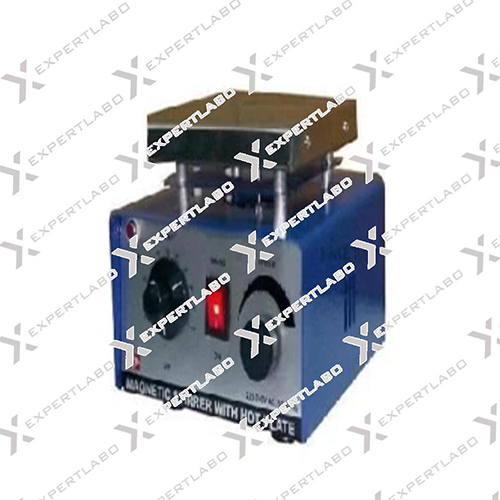
Digital Magnetic Stirrer With Hot Plate
Price 1500.0 INR / Piece
Minimum Order Quantity : 1 Piece
Features : Digital temperature & speed control, corrosionresistant top, timer function, automatic temperature maintenance
Material : Stainless Steel and ABS Plastic
Application : Mixing liquids and solutions in laboratories with simultaneous heating
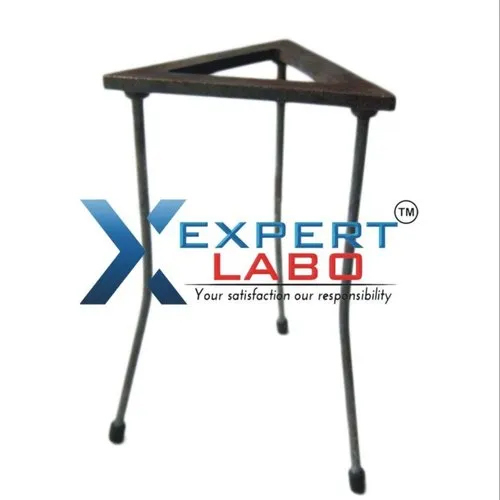
Triangular Metal Tripod Stand
Price 200 INR / Unit
Minimum Order Quantity : 10 Units
Features : High Quality
Material : Metal
Warranty : Yes
Application : Lab
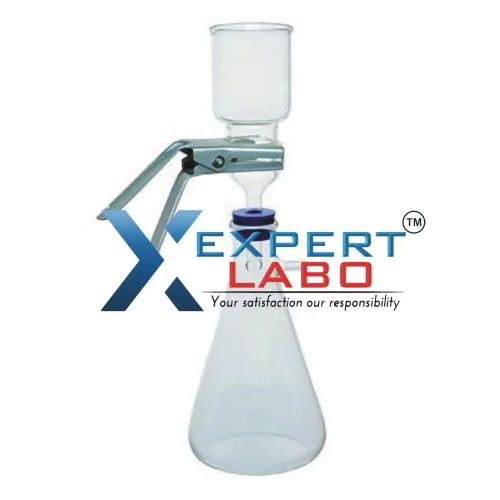
Non Symmetrical Buchner Funnel Filtration Holder
Price 200 INR / Unit
Minimum Order Quantity : 100 Units
Features : High Quality
Material : Borosilicate Glass Funnel And Base; Anodized Aluminum Spring Clamp; Silicone Stopper
Warranty : Yes
Application : Lab
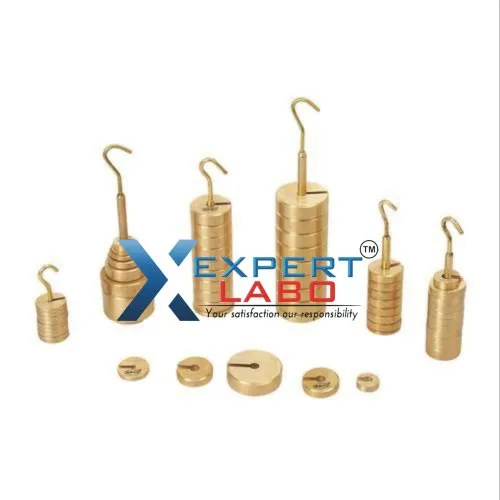
Laboratory Brass Slotted Masses Set
Price 450 INR / Unit
Minimum Order Quantity : 100 Units
Features : High Quality
Material : Brass
Warranty : Yes
Application : Lab

Expert Labo
GST : 06BELPA5037D2ZX
GST : 06BELPA5037D2ZX
Office 1001, Housing Board Colony, Ambala Cantt, Ambala Cantt - 133001, Haryana, India
Phone :07971459752
Mr Ajay Manocha
(Proprietor)
Mobile :07971459752
Mr- Ajay Manocha
(Proprietor)
Mobile :07971459752
 Send Inquiry
- Biology Models
- Laboratory Equipment
- Pharmaceutical Lab Equipment
- Laboratory Instruments
- Physics Equipments
- Laboratory Glassware
- Laboratory Apparatus
- Hospital Equipment
- Physics Instruments
- Testing Machine
- Hospital Furniture
- Oxygen Flow Meter
- Educational Aids
- Biological Models
- Hospital Bed
- Cement Testing Equipment
- Soil Testing Equipment
- Anatomical Models
- Suction Machine
- Hospital Uniform
- Autoclave And Sterilizer
- Mortuary Cabinet
- Laboratory Microscope
- Medicine Cabinet
- Crash Cart Trolley
- Surgical Tray
- Compression Testing Machine
- Hot Air Oven
- Lab Safety Products
- Laboratory Testing And Measuring Instrument
- Survey Total Station
- Blood Pressure Monitor
- Dialysis Chair
- Examination Couches
- OT Lights
- OT Tables
- Patient Transfer and Handling System
- Ward -OT Equipments
- Examination Lights
 Send Inquiry
 Send SMS
Expert Labo
All Rights Reserved.(Terms of Use)
Developed and Managed by Infocom Network Private Limited.
Developed and Managed by Infocom Network Private Limited.

