

Call us now
07971459752
25 flasks 100 ml Rotary Flask Shaker
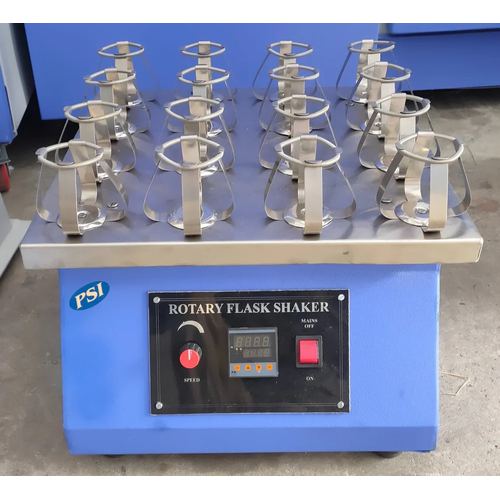

25 flasks 100 ml Rotary Flask Shaker Specification
- Temperature Resistance
- Up to 50C
- Shape
- Rectangular
- Control Type
- Digital Speed Controller
- Power Supply
- AC Mains
- Features
- Accommodates 25 flasks of 100 ml each, Smooth rotation, Low noise, Heavy duty motor, Sturdy construction, Non-slip platform
- Display Type
- Digital
- Accuracy
- 2 RPM
- Speed Range
- 20 to 250 RPM
- Type
- Rotary Flask Shaker
- Dimension (L*W*H)
- 760 x 600 x 490 mm
- Equipment Type
- Laboratory Rotary Flask Shaker
- Equipment Materials
- Mild Steel (Powder Coated)
- Power
- 1/20 HP Motor
- Voltage
- 220-240V AC
- Material
- Steel platform with rubber disc
- Application
- Mixing and shaking flasks for laboratory use
- Capacity (Ltr)
- 2.5 L
- Power Consumption
- Approx. 60 W
- Number of Flasks
- 25
- Noise Level
- <60 dB
- Protection
- Overload and overcurrent
- Operation Mode
- Continuous or timed
- Maximum Load
- 8 kg
- Suitable For
- Pharmaceutical, Chemical, Food, and Biological Laboratories
- Flask Capacity
- 100 ml per flask
- Platform Size
- 450 x 450 mm
- Finish
- Powder Coated
- Timer
- 0 to 120 minutes
About 25 flasks 100 ml Rotary Flask Shaker
The Rotary Flask Shaker is a laboratory mixing equipment designed for continuous shaking and uniform mixing of liquids, chemical solutions, and biological samples. It is widely used in laboratories, research centers, educational institutes, pharmaceutical industries, and microbiology applications.
Manufactured with a sturdy metal body and multiple flask holding clamps, the machine provides stable and vibration-free operation for efficient sample processing.
Key Features:
- Heavy-duty and durable construction
- Multiple flask holding capacity
- Smooth and uniform rotary shaking motion
- Adjustable speed control system
- Low vibration and noise operation
- User-friendly control panel
- Suitable for continuous laboratory use
Applications:
- Chemical laboratories
- Pharmaceutical industries
- Research and development labs
- Microbiology and biotechnology labs
- Educational institutions
Benefits:
- Ensures uniform mixing of samples
- Improves laboratory efficiency
- Reliable and stable operation
- Easy to operate and maintain
- Suitable for various flask sizes
Reliable Mixing for Accurate Lab Results
Enjoy smooth and consistent mixing with the rotary flask shaker's advanced digital speed control and non-slip platform, engineered for optimum performance in demanding laboratory environments. Its heavy-duty motor guarantees stable shaking for up to 25 flasks, while built-in safety features protect both users and equipment during prolonged usage.
Flexible Usage Across Scientific Laboratories
The shaker's adaptable features suit various applications in pharmaceutical, chemical, food, and biological research. With a temperature resistance up to 50C and 2.5 Ltr total capacity, this model provides effective solutions for sample mixing, ensuring homogeneity and reliability in research processes.
FAQ's of 25 flasks 100 ml Rotary Flask Shaker:
Q: How do I safely operate the 25 flasks 100 ml rotary flask shaker?
A: To ensure safe operation, place the shaker on a flat surface, securely position up to 25 flasks (100 ml each) on the non-slip platform, and connect to a 220-240V AC power source. Set the desired speed and time using the digital controller, and monitor operation through the digital display. Always follow the manufacturer's safety guidelines, utilizing overload and overcurrent protection.Q: What applications is this rotary flask shaker suitable for?
A: This rotary flask shaker is designed for use in pharmaceutical, chemical, food, and biological laboratories. It is ideal for mixing, aerating, and cultivating liquid samples or cultures, providing uniform agitation necessary for accurate experimental results.Q: When should I use the timer versus continuous operation mode?
A: Use the timer function (0-120 minutes) when a specific, controlled period of shaking is required as part of your experimental protocol. Select continuous operation for processes that demand extended, uninterrupted mixing. Both modes can be easily set through the digital control interface.Q: Where should this laboratory shaker be installed?
A: The shaker should be installed in a stable, well-ventilated laboratory environment with access to AC mains (220-240V). Ensure adequate space (dimensions: 760 x 600 x 490 mm) is available to accommodate the shaker and allow easy access to controls and platform.Q: What are the main steps in the shaking process using this equipment?
A: Start by loading up to 25 flasks on the platform. Set the desired RPM and shaking duration on the digital controller. Begin the mixing process, monitoring operation via the digital display. The shaker operates smoothly, ensuring even mixing, and automatically stops after the set timer, or you can stop it manually in continuous mode.Q: How does the digital speed control benefit laboratory workflows?
A: The digital speed controller provides accurate RPM settings (20-250 RPM, 2 RPM accuracy), ensuring consistent and reproducible shaking results. This precision improves experimental reliability and saves time by quickly achieving the desired agitation conditions for sensitive laboratory procedures.Tell us about your requirement

Price:
Quantity
Select Unit
- 50
- 100
- 200
- 250
- 500
- 1000+
Additional detail
Mobile number
Email

More Products in Laboratory Equipment Category

Stirrer Machine
Price 80000 INR / Unit
Minimum Order Quantity : 1 Unit
Features : Heavy duty motor, corrosion resistant, noiseless operation
Material : Stainless Steel Stirrer Impeller & Shaft
Application : Mixing and stirring laboratory reagents, chemicals, or solutions
Shape : Rectangular Base
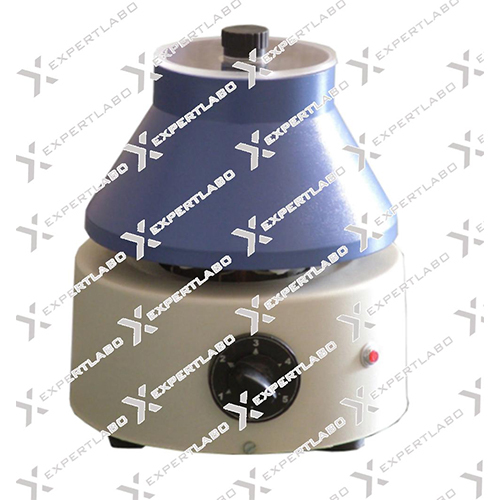
Doctor Centrifuge
Price 1500 INR
Minimum Order Quantity : 1 Piece
Features : Balanced head, low noise, easy to clean, userfriendly operation
Material : Metal/PVC
Application : Separation of blood or urine samples
Shape : Rectangular Base, Round Lid

Triangular Metal Tripod Stand
Price 200 INR / Unit
Minimum Order Quantity : 10 Units
Features : High Quality
Material : Metal
Application : Lab
Shape : Tripod
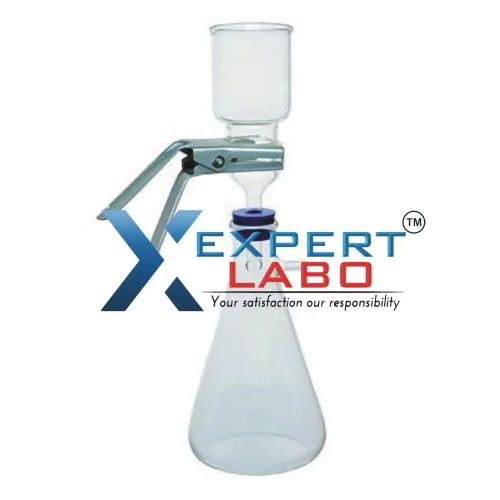
Non Symmetrical Buchner Funnel Filtration Holder
Price 200 INR / Unit
Minimum Order Quantity : 100 Units
Features : High Quality
Material : Borosilicate Glass Funnel And Base; Anodized Aluminum Spring Clamp; Silicone Stopper
Application : Lab

Expert Labo
GST : 06BELPA5037D2ZX
GST : 06BELPA5037D2ZX
Office 1001, Housing Board Colony, Ambala Cantt, Ambala Cantt - 133001, Haryana, India
Phone :07971459752
Mr Ajay Manocha
(Proprietor)
Mobile :07971459752
Mr- Ajay Manocha
(Proprietor)
Mobile :07971459752
 Send Inquiry
- Biology Models
- Laboratory Equipment
- Pharmaceutical Lab Equipment
- Laboratory Instruments
- Physics Equipments
- Laboratory Glassware
- Laboratory Apparatus
- Hospital Equipment
- Physics Instruments
- Testing Machine
- Hospital Furniture
- Oxygen Flow Meter
- Educational Aids
- Biological Models
- Hospital Bed
- Cement Testing Equipment
- Soil Testing Equipment
- Anatomical Models
- Suction Machine
- Hospital Uniform
- Autoclave And Sterilizer
- Mortuary Cabinet
- Laboratory Microscope
- Medicine Cabinet
- Crash Cart Trolley
- Surgical Tray
- Compression Testing Machine
- Hot Air Oven
- Lab Safety Products
- Laboratory Testing And Measuring Instrument
- Survey Total Station
- Blood Pressure Monitor
- Dialysis Chair
- Examination Couches
- OT Lights
- OT Tables
- Patient Transfer and Handling System
- Ward -OT Equipments
- Examination Lights
 Send Inquiry
 Send SMS
 Call Me Free
Expert Labo
All Rights Reserved.(Terms of Use)
Developed and Managed by Infocom Network Private Limited.
Developed and Managed by Infocom Network Private Limited.

